

Videos suggested at the end of this video are not necessarily endorsed by this website
It seems important to consider why, over 200 years ago, the American colonists became determined to win independence from Great Britain. It’s common knowledge that the Pilgrims came over from England in 1620 to escape the religious persecution in England and be free to serve God as they desired. But what led them to desire governmental independence after they came here? An article called “The Root Causes of the Revolution” on a website dubbed ThoughtCo.com helped me give some answers. Basically, there was a difference between the way Great Britain treated the colonists and the way the colonists believed they ought to be treated. Americans believed they should have equal rights with their counterparts in England. Great Britain saw the colonies as something to be used for the advantage of the monarch and the parliament. This disagreement can be seen in the cry of “No Taxation Without Representation!” raised by the colonists.
Here are some factors that influenced the minds of those living in the colonies of America:
(1) The distance between the American colonists and Great Britain lent itself to independence, and anyone willing to venture to a new world was likely to have an independent spirit.
(2) The colonists were allowed to have legislatures to collect taxes, support troops and pass laws, but later Great Britain lessened their power.
(3) The British Prime Minister Robert Walpole had a policy of lax trade relations, believing that freedom would encourage trade.
(4) Many of the leaders of the revolt had been reading literature of “The Enlightenment” which taught the ideas of “social contract” (the government existing for the purpose of serving the people), limited government, the consent of the governed, and separation of powers (the idea of having legislative, judicial, and executive branches of government to safeguard against absolute power).
The intensity of the ill will between the British and the colonists heated up in 1773. By the Tea Act of 1773, the British East India Company was allowed to sell tea to the colonists without paying taxes to England, but the colonists had to pay taxes on the tea that came into their ports. In December of that year, 150 colonists disguised themselves as Mohawk Indians, boarded three ships, and dumped 45 tons of tea into Boston Harbor. This is what became known as “The Boston Tea Party.” In retaliation, Britain passed five “Intolerable Acts.” In response to those acts, twelve of the thirteen colonies met in 1774 from September to October in Philadelphia. This meeting is called the “First Continental Congress.” In April of 1775, conflict between the British and the colonists erupted when British soldiers came to Lexington and Concord to take possession of colonial gunpowder and take Samuel Adams and John Hancock into custody. The colonists lost 8 men and the British 70. In May of 1775 all thirteen of the colonies met in Philadelphia, forming the “Second Continental Congress.”
 I found assistance in researching the history of Independence Day, or “The Fourth of July,” in a book entitled America’s Patriotic Holidays—An Illustrated History by John Wesley Thomas and Sandra Lynn Thomas.
The book contains many colorful postcards from yesteryear, along with some other art. The day we remember on the Independence Day holiday, July 4, 1776, was only the beginning of the building of a nation. During the beginning of the American Revolutionary War, there was a vote by the Second Continental Congress to accept a resolution legally separating the thirteen colonies in America from Great Britain. The document was completed on July 2, 1776, written mainly by Thomas Jefferson. The final draft of the document was approved two days later, on July 4th, after debating it and making some changes.
You may remember memorizing the Preamble to the Declaration of Independence in school. The second paragraph states, “We hold these truths to be self-evident, that all men are created equal, that they are endowed by their Creator with certain inalienable Rights, among those are Life, Liberty, and the pursuit of Happiness.” To see the entire Preamble and Declaration of Independence, CLICK HERE.
The Articles of Confederation
The next thing the Second Continental Congress needed to accomplish was to write up an agreement wherein the original thirteen states would be established as sovereign states of the United States of America. This document, called the “Articles of Confederation,” would be America’s first constitution. To see the Articles of Confederation, CLICK HERE. Although they began drafting it in 1776, it was not signed by all of the thirteen states until March 1, 1781. During that time, the country was still absorbed in fighting Great Britain. A deciding major land battle was won in Yorktown, Virginia, on October 19, 1781, with the help of France.
At the Treaty of Paris on September 3, 1783, Great Britain finally recognized the United States of America as a sovereign nation, formally ending the Revolutionary War. The Treaty of Paris was ratified on January 14, 1784, which inspired an annual celebration called “Ratification Day.”
Then Congress began to realize that the growth of America in size and complexity would require a strong Federal government. They would need to collect taxes, partially to support a stable army. In May of 1787 the United States Constitution Convention met in Philadelphia to begin designing a whole new kind of government construction. It would consist of a two-part legislative branch, a judicial branch, and an executive branch. On September 17, 1787, the delegates completed their task. That day is referred to as “Constitution Day.” The Constitution was ratified on June 21, 1788. The first ten amendments , known as the “Bill of Rights,” was ratified on December 15, 1791, about a year and a half after it was adopted on August 21, 1789. To see the Constitution, CLICK HERE. To see the Bill of Rights, CLICK HERE.
Treaty of Paris
Most of the pledges included in the Treaty of Paris were one-sided, so America suffered harassment by the British navy for another 29 years. The British navy kept American ships from participating in trade with British colonies in the West Indies, and it stopped and searched American ships. Sometimes the stopping of American ships resulted in cargo being removed or some of the sailors being forced into the British navy.
In view of the interference of the British navy, President James Madison felt it necessary to declare war on Britain on June 18, 1812. The U.S. Navy had only 20 frigates [warships designed for speed and maneuverability, according to Wikipedia], but the British possessed more than 1,000 men-of-war [ships that have cannons aboard and are moved by sails, according to Wikipedia].
It was the War of 1812 that prompted the writing of our national anthem, “The Star Spangled Banner.” I think you will get much more from the story by David Barton’s recounting of it. David Barton has an organization called “Wallbuilders.” I have heard him speak on Christian television numerous times. He has fascinating information about the heritage of our nation.
Videos suggested at the end of this video not necessarily endorsed by this website
I was curious about the other verses of the Star Spangled Banner that we usually don’t hear. I especially like the fourth verse. If you would like to see all four of the verses, CLICK HERE.
The War of 1812 closed on December 24, 1814, when the Treaty of Ghent (in Belgium) was signed. Before it was ratified by Congress on February 16, 1815, a bloody and decisive land victory was won by the Americans on January 8, 1815 at the Battle of New Orleans. Major General Andrew Jackson led an army made up of over 4,000 regular soldiers, rural militiamen, and Indians from the Choctaw tribe against 11,000 British soldiers. Andrew Jackson later became America’s seventh president.
Independence Day Celebrated
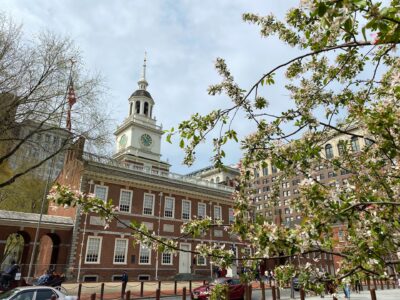 Independence Day was first celebrated on July 4, 1777, in Philadelphia. Congress declared it as a Federal holiday on June 28, 1870. On July 5, 1776, John Adams wrote a letter to his wife, in which he stated, “The second day of July, 1776, [the day the first draft of the Declaration of Independence was presented] will be the most memorable epoch in the history of America . . .It ought to be solemnized with pomp and parade, with shows, games, sports, guns, bells, bonfire, and illuminations . . .” Well, as it turns out, we celebrate on July 4th, the day the document was approved. But we celebrate in much the same way that John Adams described. As we approach this 4th of July celebration, let’s take time to be thankful for those who valued government “of the people, by the people, and for the people” enough to fight and die for it.
America is not just a “pure democracy.” It is a “democratic republic” because it has a Constitution that guarantees certain rights than cannot be lost by a mere vote. A change in those rights would require a change in the Constitution. That’s why our Constitution and its intended interpretation are so important. As long as our nation is a place that allows us to have our personal freedoms– including our religious freedom– and remains a force for good, we can wholeheartedly pledge our allegiance to the flag of the United States of America. I hope you will think about the privilege of pledging allegiance to the flag of our great country and the importance of guarding our freedoms as you watch the video below.
Leave A Comment