

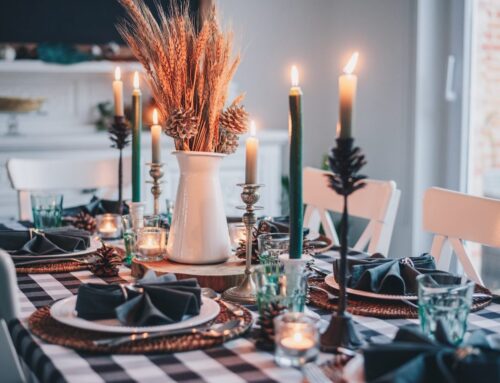
A neatly set table is pleasing to the eye and makes for a more serene meal any time, but it’s especially enjoyable to have a very nicely set table for special meals. Your table may be formal and elegant or informal and fun. Even disposable tablecloths and dinnerware can look great, when the table is thoughtfully set. In fact, if your ceramic dishes or china clash with your decorations, disposable plates can be very helpful. And who doesn’t to skip washing the dishes? Or maybe you want to invest in some neutral-colored or clear reusable plastic plates.
Centerpieces
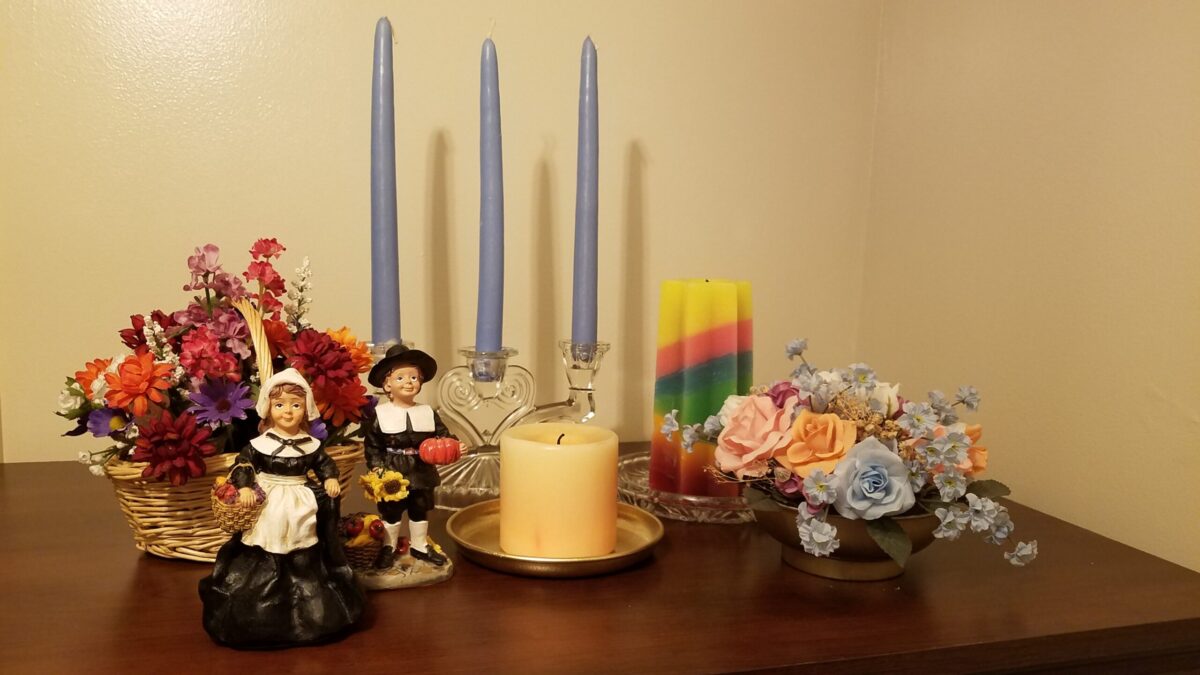
For special occasions, it’s fun to have a candle or two, a bouquet of flowers, or any center attraction appropriate for the occasion. (If allergies are a problem, consider artificial flowers for a bouquet.) Make sure you will still have room for all your serving dishes. Also, be sure the center attraction is not tall enough to interfere with eye contact of your guests. What looks beautiful in a magazine picture isn’t always practical. You may need to adjust the idea for practicality.
Napkins
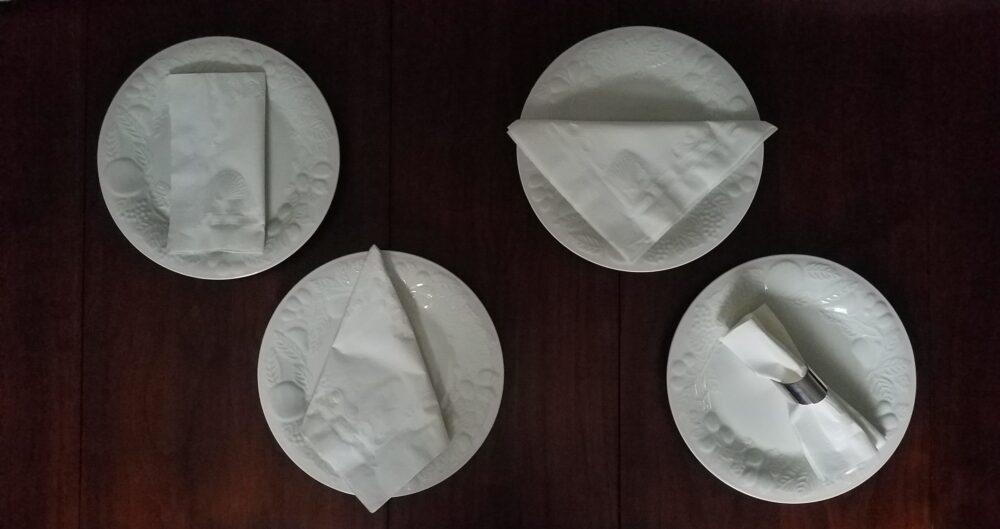
Napkins serve a practical function, but they can also help decorate the table. Some simple ways to fold them that I have used are folded in half straight, folded in half diagonally, folded to a point, or tucked into a napkin ring. There are many printed paper napkins that are best just laid “as is” on the plate, to display the whole design. (Sometimes restaurants place napkins in the water glass, like a plume. That looks very classy. But since it seems more convenient to pour the water before guests are seated, that doesn’t work well for me.) Napkins are usually placed to the left of the fork(s), under the fork(s), or on the plate. Formally speaking, smaller napkins are intended for lunch or dessert, and larger ones are intended for dinners. But if you use a different size, probably no one will be too upset. Of course, little napkins for a messy chicken dinner eaten with the hands wouldn’t be very practical. If you want to be really fancy, you can find some very elaborate ways to fold napkins online. Cloth napkins offer more options. Folding your napkins ahead of time can avoid stress.
Napkin Rings
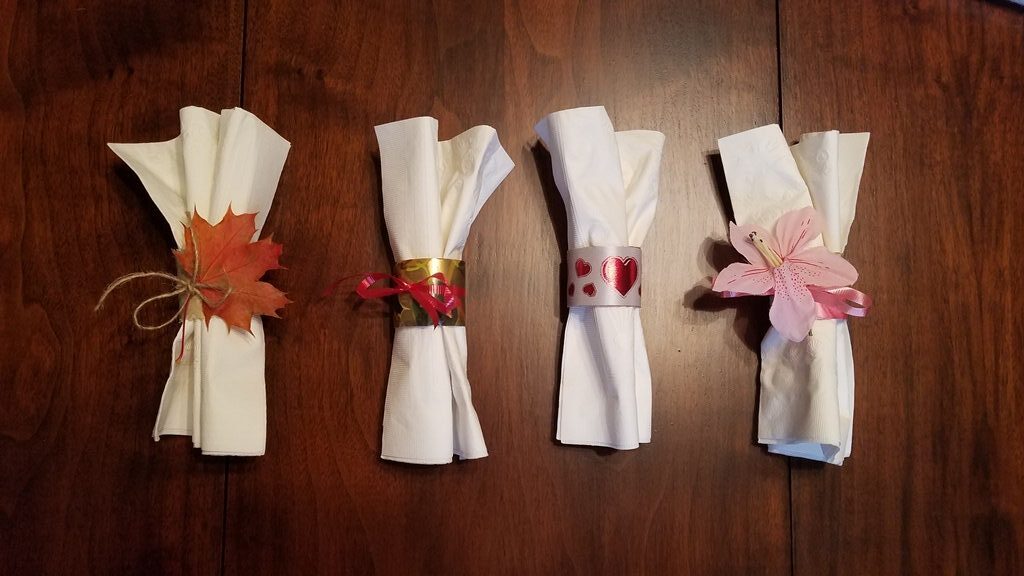
Perhaps you have some napkin rings. If you don’t have any but would like to use some, you could create some yourself. One simple way to make them is to cut pieces of empty paper towel or toilet paper rolls. A utility knife or small scissor with a sharp point will probably be needed. You may want to save up some empty wax paper or plastic wrap rolls for more durable napkin rings. You will probably need an electric saw to cut them. Use your imagination to decorate them. Make your napkin rings well in advance, to avoid last-minute anxiety. However, if you use something like fresh flowers, leaves, or greenery in your napkin rings, you would want to add that part shortly before using them. It will need to look fresh.
Place Cards
I’m a big believer in using place cards when you have a big table, full of guests. There are several reasons for that. First of all, it avoids guests having to mill around the table and try to figure out who should sit where, when it comes time to be seated at the table.
Another reason I like place cards is that you can seat guests together who would feel comfortable sitting next to each other and carrying on conversation. Maybe Uncle George and cousin Wilbur are dogmatic sports fans. Maybe Aunt Celia and your friend Annette are both elementary teachers.
Another very good reason for using place cards is that if you have guests who aren’t familiar with each other’s names, it’s very helpful. It could be very awkward to say, “Hey, you in the red dress . . . could you pass me the butter?”
Another situation in which place cards are helpful is when you have young children at your table. You may want to use smaller glassware that is less clumsy for them to handle, or even provide a booster seat. You can seat a parent, or someone who routinely helps the child, beside them.
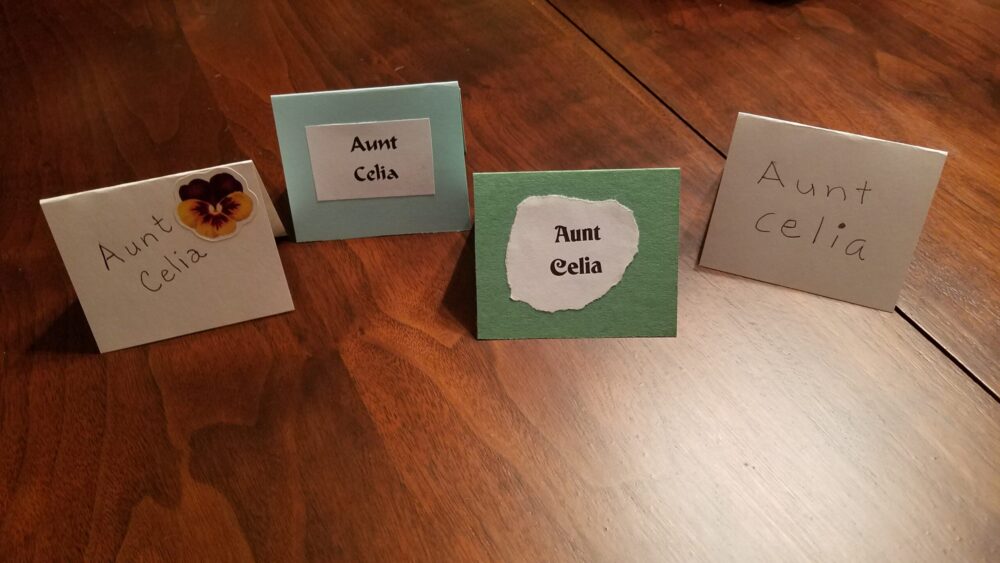
I have found that plain, white 3” x 5” index cards make great place cards. All you have to do is fold them in half, and they perch nicely on the table. Write the names on both sides of the “tent,” to make it easy for everyone to find their spots at the table. If you want to be more colorful, you can cut pieces of paper about 3” x 5” from colored card stock or heavy construction paper. You might even find some small stickers, appropriate for the occasion, that you can add. Make your place cards ahead of time and jot a diagram of the seating arrangement on a blank sheet of paper.
Assign the job of writing the names to the best printer in your family. You could have one of the kids do it. It’s one way to let them be a part of the preparation. The writing of young children is usually warmly received, however imperfect it may be. Another option would be to print out the names, if you have a printer. A 24-point font seems to be about right. You could cut out the names and glue them on the cards or tear them out and glue them on for a different effect.
I went online to see if the names on the place cards should reflect relationships, such as “Aunt Celia.” I didn’t find an answer. In my opinion, the cards should reflect the relationship to the host or hostess. It seems warmer and more respectful. For a grandmother maybe you could say “Grandma,” and put her first name in parentheses if there are guests who don’t know her name.
While I was looking for an answer about showing relationships on the cards, I discovered an article about using place cards at a dinner party on a website called thehealthminded.com. It confirmed some of my reasons for wanting to use place cards and also gave me a couple of other good ideas. It suggested that you could place someone who is talkative in the middle of the table to help keep conversation going. It also suggested that if your seating arrangement didn’t go as well as you had hoped, you could leave the table for dessert and let everyone sit wherever they wish.
The Basic Flatware Rules
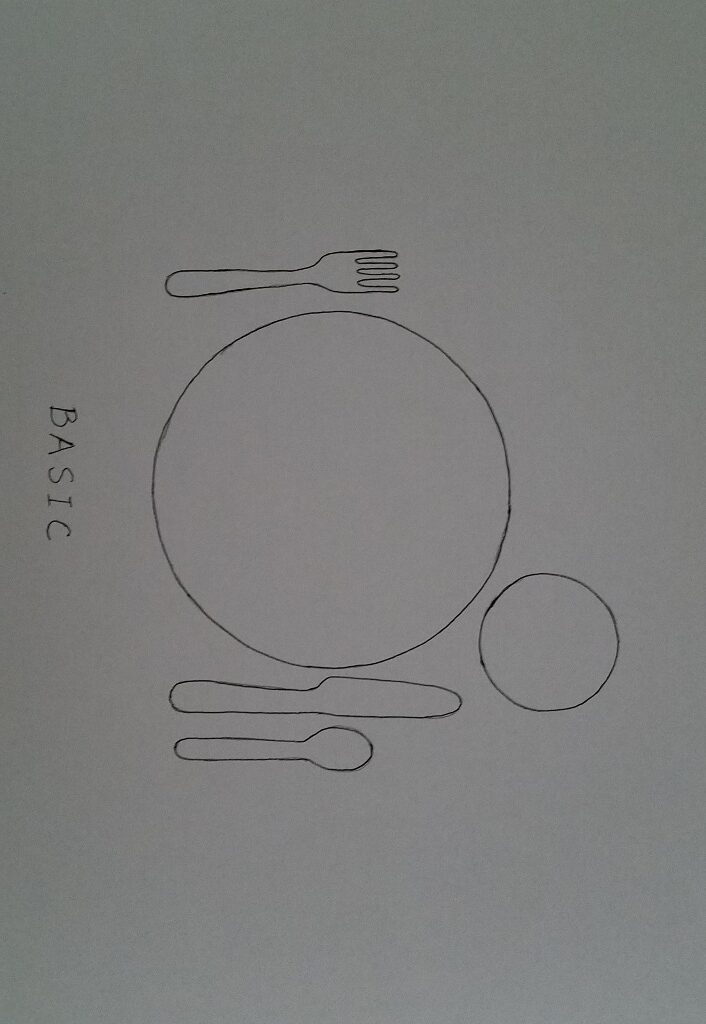
Forks always go on the left and the knife and spoons on the right. The bottoms of the flatware pieces should line up with the bottom of the main plate. The knife blade should face toward the plate. Place eating utensils in the order used. Often soups are not served with a meal, so there is no need for the soup spoon. If serving soup, the soup spoon should be placed on the outside, since the soup would be eaten first. A salad fork, if used, should be placed on the outside, since guests would be eating the salad first. (The average hostess probably doesn’t usually add the salad fork to the place settings, except maybe when serving the salad as a separate course to be removed after eaten. In many flatware sets, salad forks double as dessert forks. That means they may have to be washed before dessert is served, if used for salad.)
Extra Serving Plates
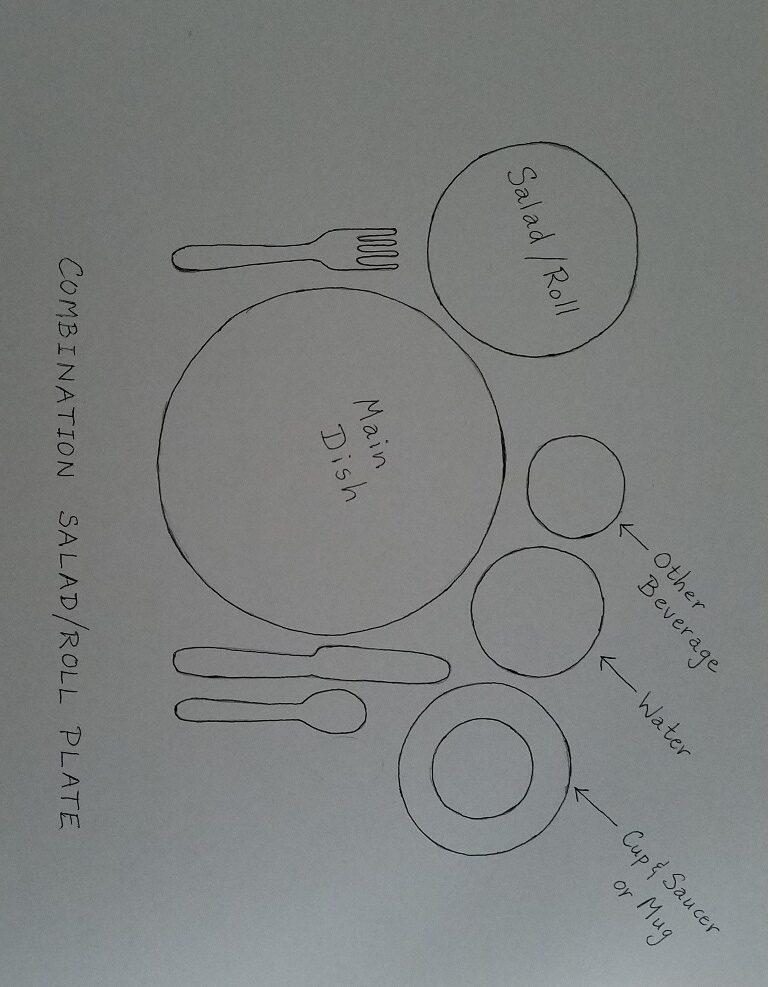
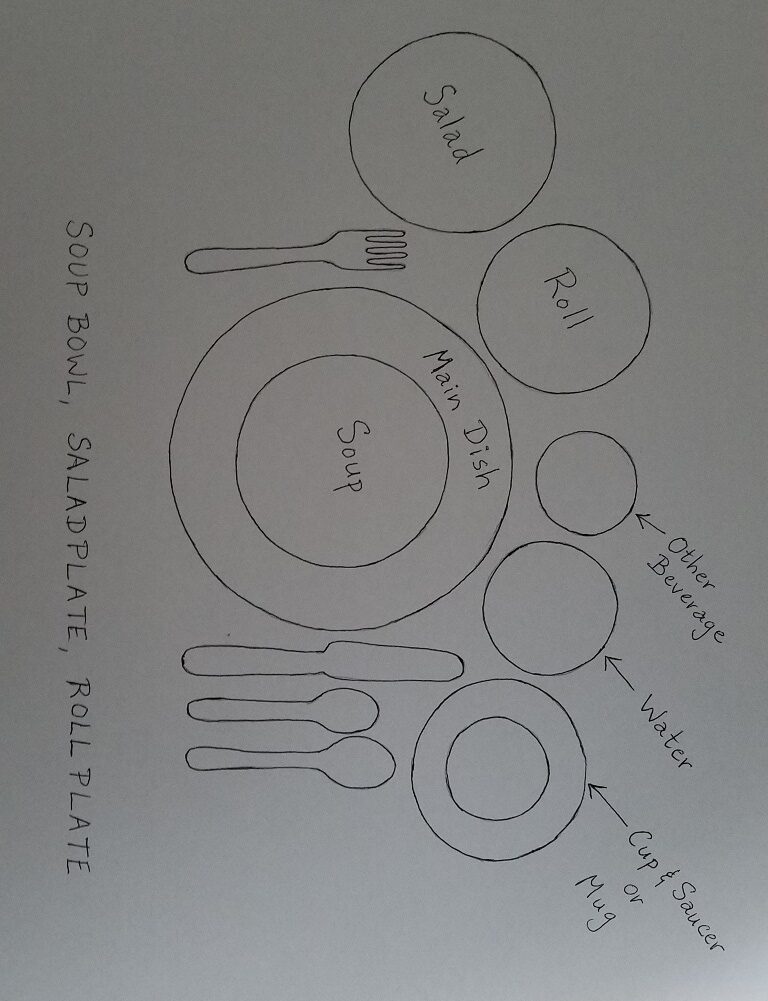
When serving a large dinner, separate plates for salad and small plates for rolls are nice, if there is room on the table. Foods served may not seem as appetizing if salad leaches over into other foods on the same plate. Roll plates may be helpful in preventing soggy rolls or overloaded plates. Not all dinner sets have roll plates, and too many different plates can make it seem very crowded. A salad plate may be sufficient for both the salad and the roll.
Setting the table is a great way for kids to help with dinner preparation. It may also give them a sense of accomplishment. Even some kids as young as five might be able to handle this job, with extra guidance. You could set a sample place setting for them to follow.
Here I will provide some printable guide sheets for the most common table settings, to help kids learn to set the table. If you have a set of flatware with extra pieces, such as dessert forks and spoons or individual butter knives, or you use additional beverage glasses, you can check online for guidance for more elaborate, formal place settings and make your own guide sheet (or alter one of the ones provided). Be sure your kids line up the place settings with the chairs and leave uniform, adequate space between the seats. They will need instructions as to where you want the napkins.
For Basic Place Setting, CLICK HERE.
For Place Setting without Soup Bowl, and with combination Salad/Roll Plate, CLICK HERE.
For Place Setting with Soup Bowl and Salad and Roll Plates, CLICK HERE.
There is a huge wedding dinner that may be happening sometime soon. I feel certain that the table will be set with the finest of linens and the most beautiful of dishes and flatware, for such a wonderful occasion. Revelation 7:19 [NIV] says, “Blessed are those who are invited to the wedding supper of the Lamb.” Jesus—who sacrificed His life to pay for the sins of all who believe in Him and want to turn from their old ways—is the “Lamb.”
Ephesians 5:22-23 explains that The Church, which consists of all of the believers, is the “Bride of Christ.” Marriage is symbolic of the union believers have with Christ. Before Jesus returns to earth to reign at the close of the Great Tribulation, He will “snatch His bride away.” (See I Thessalonians 4:16-18 and I Corinthians 15:51-53.) Then there will be a great celebration in Heaven. I hope to see you there.
Below is a song looking forward to that great celebration.



I haven’t hosted a dinner in years. Your post had many helpful suggestions. Thank you!
So glad you felt the suggestions were helpful, Pam. If you should host a dinner or even just help, I hope this article will be a good resource for you.