

Part of being a good U.S. citizen is being informed on issues and candidates so that you can use your valuable right to vote in a responsible way. You might also use the information to inspire you to sign a petition, participate in a peaceful protest, or write a letter to a politician. However, getting truthful, unbiased information isn’t so easy these days.
WHAT HAS HAPPENED TO THE NEWS?
 In my memory, news broadcasts were much different when I was young. Reporters on the black and white screen seemed to be simply stating the facts. They did not try to sway their listeners with their words. They just reported the facts and allowed the listeners to form their own opinions. A news report consisted of facts, and an editorial consisted of opinions. They were two separate entities, rather than being one blurry entity. One of our local stations seems to be attempting to go back to the old way. Toward the end of the broadcast, they pick a controversial issue and allow a representative of conservatives and liberals to each state their opinions.
I don’t recall any commercials being present in the newscasts of earlier times. A 1999 article on the niemanreports.org website called “The Transformation of Network News” confirms my recollection. It states that 20 years before the article was written (40 years ago now that we are in 2019) the “Big Three” networks didn’t expect to make a profit from their coverage. It was considered a public service. The TV industry faces much competition today, so commercials are becoming more and more prominent. The other day I became frustrated by the amount of commercials one of the “Big Three” crammed into the last few minutes of the news.
At the time the niemansreports.org article was written, the Big Three were shifting their emphasis from “hard news” to prime time news magazine shows, since they were more profitable. The evening news was focusing more on in-depth stories, rather than headlines. It seems to me that these trends are continuing. I found an article entitled “How TV News Has Evolved in the Past 50 Years” on a website called thebalancecareers.com. It was updated at the end of 2018. It states that the Kennedy assassination and the Vietnam War had a huge impact on TV news. They led to moving from a person just sitting at a desk reading to the presentation of live video feeds. In the 70’s news teams began “happy talk” between team members to develop a connection with the viewers. In the 90’s the accessibility to Cable TV news was creating stiff competition. [Competition by newspapers began to lessen due to the internet destroying their classified ads income, causing them to downsize. Now the internet provides constant news feeds that are causing both newspapers and TV news to struggle to survive. ] The article on TV’s past 50 years concludes by saying that “traditional TV news” can raise its chances of survival by means of “solid, accurate reporting that isn’t influenced by outside sources, creative visual presentations, and credible TV personalities who form long-lasting relationships with their audiences.” That makes sense to me.
A GAIN FOR GOOGLE
An article in the Sunday, June 16, 2019, issue of The Oregonian entitled “A gain for Google, a loss for news industry and readers” alerted me to a recent development. Something may happen soon to “level the playing field” between journalists and online platforms. On April 3, 2019, a bill (HR2054 of the 116th Congress) was introduced in the House of Representatives. If passed, it would lessen Google’s advantage and help give the journalists a fair chance by allowing journalists to negotiate for fair compensation for their stories. As it stands now, journalists cover the costs of doing the research and producing the articles. Internet readers can benefit without even going to the organizations that originally produced the articles, so the internet platforms reap the ad revenue instead of the original journalism organization reaping it. The original organizations need revenue to invest in quality journalism. I have noticed repetition of some of the same news stories using the same video clips throughout the week on the Big Three networks. Perhaps this is the result of a shrinking budget.
I suppose most newspapers have been tempted at some time or other to use sensationalism to gain higher readership numbers. I, for one, don’t trust tabloids to deliver the truth. Before news broadcasts were used to gain profits for the TV networks, there was probably no need for sensationalism. There were no sponsors to compete for. It stands to reason that sensationalism would now be a temptation for TV news, in order to get higher ratings. Now some internet sources use sensationalism, come-ons, or outright lies to get you to read the plethora of ads scattered through their articles.
ADVICE FROM A CONGRESSMAN
A while back I ran across a newspaper article in The Oregonian contributed by a representative in the Oregon State Congress named Kurt Schrader. It was called “Finding good information in the age of ‘fake news.’ ” I’ll outline some of the helpful suggestions provided by Representative Schrader:
- Consider the source’s reputation for whether or not they have done research.
- Read publications having different political positions.
- Don’t be too certain about the accuracy of the news reports, remembering that deadlines discourage verifications.
- Don’t be misled by headlines. Read the whole article to get the whole picture.
- Wait for later articles on the subject, which have had more time to be thoroughly researched, before forming an opinion.
- Find out who is paying for the news service providing the story.
- Patronize news services that report with an open mind.
WHEN DID “FAKE NEWS” COME INTO BEING?
A friend told me about a relevant YouTube video showing a “TEDx” event at the University of Nevada. (A TEDx event is a licensed talk independently organized, concerning anything from science to business—originally Technology, Entertainment, and Design.) This particular talk is called “How Real Is Fake News?” by Sharyl Attkisson. (Sharyl has previously worked for CBS and CNN and now works for ABC. She is also a best-selling author.) In the talk, Sharyl reminds us that “fake news” is not something entirely new. One example she gives is that early reports blamed a security guard for the Olympic bombing in 1996. Later it was found that he was only trying to move people away from the bomb.
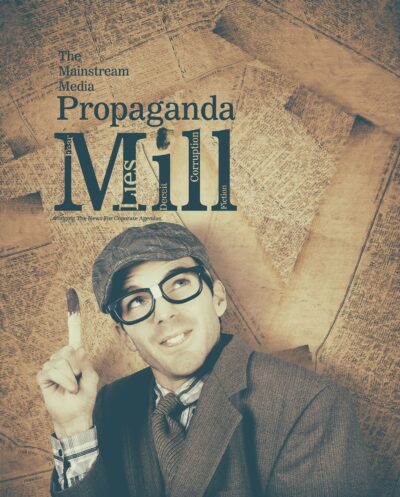 Sharyl stated that the internet has revolutionized fake news. Stories are circulated over and over on the internet before it’s even established that they are true. She cites the fact that in 2014 Rolling Stone magazine reported on a fraternity gang rape that was later found to be unsubstantiated. She mentions that in that same year testimonies of Michael Brown having his hands raised before being shot by a policeman were circulated but were later found to be probable fabrications. [The false story caused numerous protests, which in turn caused damage to many businesses.]
Sharyl explains that the term “fake news” was introduced nationally in 2016. Liberals used the term to refer to disinformation of conservatives and right-wing websites. Trump and conservatives countered by using the term to refer to, quoting Sharyl’s words, “biased, sloppy, erroneous reporting by the mainstream media and the left.” Sharyl cites an example President Trump used to verify the existence of “fake news.” There was a report that Trump had removed the Martin Luther King bust from the Oval Office. Cameras revealed that the bust was still in its place.
WHAT’S THE BIG DEAL?
Sharyl asks the question, “Why is ‘fake news’ suddenly a big issue?” She followed the money to Google donating to a non-profit organization called “First Draft,” whose purpose is reputed to be tackling news hoaxes. She feels that the term “fake news” may be being used by both sides as a propaganda tool to call the other side into question. She has several concerns:
- The media “shapes and sensors facts.”
- News broadcasts all covering the same stories and using the same phrases (such as “fake news”) indicates that powerful interests have an organized campaign to influence the public.
- The “media literacy” campaign that is supposed to “help people determine the facts” could be another way to keep people from the real facts.
SCARY POSSIBILITIES
I would add that one way to get the truth about what someone really said is to seek to hear the entire statement, rather than a clip or a summary. However, on her ABC network program called Full Measure, Sharyl Attkisson warned of new technology called “deep fakes.” Using this technology, a video can be constructed to make someone appear to say something they never really said. The U.S. Defense Advanced Research Projects Agency found that deep fakes could be detected by the absence of blinking. Unfortunately, users of this technology fixed that problem. It’s frightening to think that political figures could be made to appear to say literally anything. Experts are working to make it harder to steal photos to use for making deep fakes.
WHAT CAN WE DO TO HELP IMPROVE NEWS REPORTS?
Here’s what I think. When we believe politicians are on the wrong side of things, it is expected that, as good citizens, we should respectfully express our opinions to them. Shouldn’t we respond similarly to the media? If we feel that some news service is reporting the news unfairly, shouldn’t we let them know it? We each have only one voice; but they may realize that if one person has taken the time to express their concern, there may be many others out there with the same thoughts. The more people who raise their voices, the better. After all, we are the ones who are seeing the advertisements that support them. If people become dissatisfied with their news reports and no longer patronize them, they are in danger of losing advertisers.
 THE ONE WHO NEVER LIES
Though there are many men who will deceive, there is Someone who will never lie. Numbers 23:19 says, “God is not human, that he should lie, not a human being, that he should change his mind. Does he speak and then not act? Does he promise and not fulfill?” It’s easy to understand why God hates lying. When deception is all around us, no one knows what is really true anymore. Trust falls by the wayside. Proverbs 12:22 says, “The Lord detests lying lips, but he delights in people who are trustworthy. Proverbs 13:5 says, “The righteous hate what is false, but the wicked make themselves a stench and bring shame on themselves.”
HIS TRUTH IS MARCHING ON
The beautiful lyrics of “The Battle Hymn of the Republic” contain the words “His truth is marching on” in the first verse, and they are repeated in each chorus. According to a website called battlefields.org, the first place the lyrics of “The Battle Hymn of the Republic” appeared was on the front page of the February 1862 issue of the Atlantic Monthly, published during the Civil War. In November of 1861 Julia Ward Howe, a wealthy New York City banker’s daughter, toured Union army camps near Washington, D.C., with a minister and her husband. They began singing some popular war songs. One of the songs was “John Brown’s Body,” which had a tune borrowed from an old Methodist hymn. Reverend Clarke felt he should suggest that Mrs. Howe compose new lyrics for the melody. She answered that she had actually thought of doing that. She awoke the next morning and “found that the wished-for lines were arranging themselves in [her] brain.” She quickly got up and wrote them down. Enjoy the contagious melody of that hymn– and the stirring lyrics written by Mrs. Howe– in the video below, skillfully performed by the U.S. Army Chorus and their accompanying band. The occasion was the dedication of the George W. Bush Presidential Library in Dallas, Texas.
Scriptures taken from the Holy Bible, New International Version®, NIV®. Copyright © 1973, 1978, 1984, 2011 by Biblica, Inc. TM Used by permission of Zondervan. All rights reserved worldwide. www.zondervan.com The “NIV” and “New International Version” are trademarks registered in the United State Patent and Trademark Office by Biblica, Inc.
(Videos suggested at the end of this video are not necessarily endorsed by this website)


Leave A Comment